
Stainless steel vs ceramic vs plastic cat water fountains
Stainless steel and glazed ceramic are smooth and easy to wash, and VCA notes that plastic dishes may be associated with chin acne in cats. None of the materials is proven best, though: regular cleaning matters more than the material, so choose by weight, breakage risk, noise and how you will clean it.
On this page
The material that touches the water is the part of a fountain you can judge from the spec sheet, which is why it features in most buying advice. Here is what we can responsibly say about each, and what we cannot.
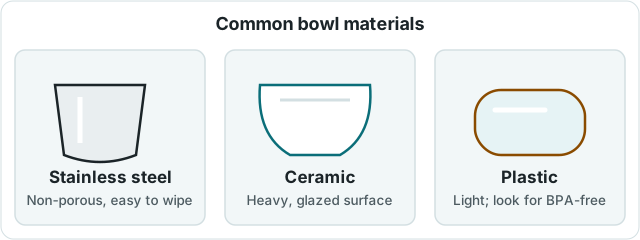
The chart summarizes the trade-offs below in one view. It is a qualitative comparison from general material properties, not data from a test.
What does the evidence say?
The one veterinary source we opened that touches the topic is VCA's page on feline acne. It says plastic food and water dishes may be associated with chin acne, that scratches or an irregular surface can make plastic more prone to bacterial contamination, and that switching to non-porous, smooth dishes such as glass or stainless steel may help in some cats. It also says the exact cause is not known, and it does not mention ceramic. So the honest summary is: there is a possible association, not a proven cause, and smooth surfaces plus daily washing are the commonly given advice. The ASPCA's cat care page likewise recommends washing water bowls daily.
Stainless steel
- Strengths: hard to break, light, smooth, usually dishwasher-safe for the bowl or tray according to several makers in our data.
- Weaknesses: can show rust spots (PETLIBRO's FAQ ties them to food salt, grease and moisture) and fine scratches; light bowls can slide or ring when water hits them.
- Specs to look for: a stated grade such as 18/8 (Pioneer says its stainless bowl is 18/8) and which parts are steel versus plastic.
See stainless steel fountains compared.
Ceramic
- Strengths: heavy and stable, smooth glazed surface, many owners find it quiet because the mass damps vibration.
- Weaknesses: can chip or crack when dropped, and a chipped glaze is harder to clean. Heavier to lift and wash.
- Specs to look for: which parts are ceramic and whether the maker says the glaze is food-safe.
See ceramic fountains compared.
Plastic
- Strengths: light, usually the least breakable, available in large reservoir sizes.
- Weaknesses: scratches more easily, which VCA links to bacterial contamination, and the possible acne association above.
- Specs to look for: BPA-free statements, and whether the part your cat's chin touches is plastic or steel. Some fountains pair a steel tray with a plastic body.
Mixed designs
Check the spec sheet rather than the product name: "stainless steel fountain" can mean a steel tray only. Many fountains combine materials, such as a stainless top on a plastic reservoir. Check what the water and your cat's mouth touch, and what is dishwasher-safe.
Decision rules
- Choose stainless steel if you want light weight, little breakage risk and easy washing, and you will wipe away any rust spots.
- Choose ceramic if you want a stable, heavy fountain and can handle it carefully.
- Choose plastic only if you accept regular close inspection for scratches, replace scratched parts, and your cat has no chin acne history.
- If your cat has chin acne already, ask your vet before changing anything.
Whatever the material, and whether your cat drinks from the tray or the stream, clean it on the maker's schedule using the cleaning guide. Slime returns on every surface eventually, as our slime page explains. This guide does not replace veterinary advice.
FAQ
Is stainless steel or ceramic better for cats?
Neither is proven better. Both are smooth and non-porous when intact. Steel is light and hard to break; ceramic is heavy and stable but can chip. Pick by your home and how you clean.
Do plastic fountains cause cat acne?
VCA says there may be an association between plastic food and water dishes and chin acne, but also says the cause is not fully known. If your cat has chin acne, ask your vet.
Can stainless steel rust?
It can show rust spots. PETLIBRO's FAQ attributes rust on its tray to food salt, grease and moisture and describes a baking soda cleaning method. Quality grades differ; see the spec page of your model.
Does a stainless steel bowl scratch?
It can pick up fine marks over time. Avoid steel wool and abrasive pads, and replace any part with deep grooves where residue collects.
Sources
This page is general information and does not replace advice from your veterinarian.