
Pet water fountains, compared by the specs that matter
A pet water fountain keeps water moving with a small pump and filters it, which some pets find more inviting than still water. Look first at the material the water touches, the pump type, the tank size per pet and how many parts you will have to wash, then follow the cat or dog path below.
Explore
- Cats
Cat fountains by material, noise, power and size.
- Dogs
Dog fountains by size, material and power, with the specs makers publish.
- Filters & Pumps
Which filter and pump fits your fountain, by model.
- Fix a fountain
Diagnostic tree for fountains that stopped, buzz, leak or run dirty.
- Brands
Every brand in our database, with line-ups, filters and support links.
- Guides
Cleaning, materials and whether your cat needs a fountain.
- Compare
Head-to-head comparisons of fountain models and brands.
- Tools
Filter cost calculator and cleaning schedule.
On this page
What is a pet water fountain?
A pet water fountain is a bowl or tray fed by a small pump from a hidden reservoir. The water moves in a stream or a gentle bubble, and most models pass it through a filter cartridge that catches hair and debris.
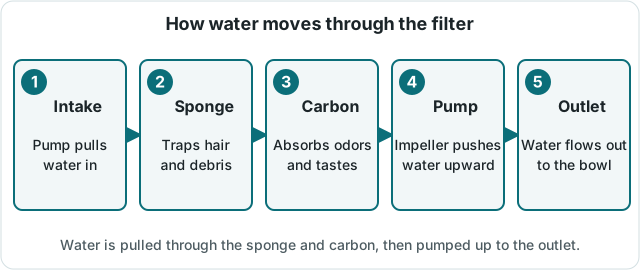
We compare fountains on the specs makers publish: capacity, materials, pump type, power source, claimed noise, dishwasher-safe parts and filter. Every row on the site links to the source and shows when we last checked it.
Cats or dogs: where to start
Cats. Most fountains are designed around cats, so the choice is wide. Start at the cat fountain guide, then narrow by what matters at your house:
- Stainless steel if you want a surface that wipes clean easily.
- Ceramic if you prefer a heavy, glazed base.
- Quiet if the unit sits near a bed or in a small flat.
- Cordless and battery if there is no outlet at the spot.
- Large tanks for multi-cat homes if more than one cat drinks.
Dogs. Dog fountains are fewer, and bigger. The dog fountain guide covers sizing and materials, and the large-breed list compares the largest tanks in our data.
How to choose, in five decision rules
- Choose by material first. If you want to avoid plastic where the water touches, check the bowl and body columns, not only the product name.
- Choose capacity by household, not by the biggest number. One cat can manage with a small tank refilled every day or two. Two or more pets need a larger one, and so does anyone who refills weekly.
- Choose cordless only if you have no outlet. A battery adds charging and, on several models, intermittent flow instead of constant flow.
- Treat noise claims as claims. A decibel figure comes from the manufacturer's own measurement. Pump design and keeping water above the minimum level matter as much.
- Count what you will wash. A fountain you dread cleaning is a fountain that gets dirty. Check which parts the maker calls dishwasher-safe and the filter interval before you buy.
After you buy
Fountains need regular care. The filters and pumps section finds the replacement part for your model, and it shows the maker's change interval. If something sounds or looks wrong, the fix pages go by symptom, from noisy pumps to low-water lights. Our cleaning guide covers the weekly routine, and the brand pages link to manuals and official support.
Do pets need a fountain?
Not always. A clean bowl of fresh water works for many pets. A fountain can help if your pet shows interest in running water or if you want to refill less often. For concerns about how much your pet drinks, ask your vet. Our guide on whether cats need a fountain explains the reasoning.
How we research
Specs come from manufacturer pages and manuals, not from retailer listings, and we show no prices, ratings or review counts. We do not test the fountains ourselves, and the site says so on every spec table. The full method is on How we research, and our disclosure explains the Amazon links.